
传教士
Has China’s industrial development squeezed others’ room for growth?: People’s Daily_我的网站

一 | Colombo, Oct 10 (UNI) There was a 10 per cent increase in remittances from the expatriate Sri Lankan workers in September over the previous month, Minister of Labour and Foreign Employment Manusha Nanayakkara said in remarks published on Monday.
Statistics released by the Central Bank of Sri Lanka (CBSL) on Saturday showed that workers’ remittances increased to $359 million in September, from $325 million in August, The Island newspaper reported.
Compared to July, workers remittances have increased by 29 per cent. This is an increase of $80 million between July and September.
However, workers’ remittances in the first nine months of 2022 were still 43 per cent lower than the remittances in 2021, the Central Bank said.
UNI MR。
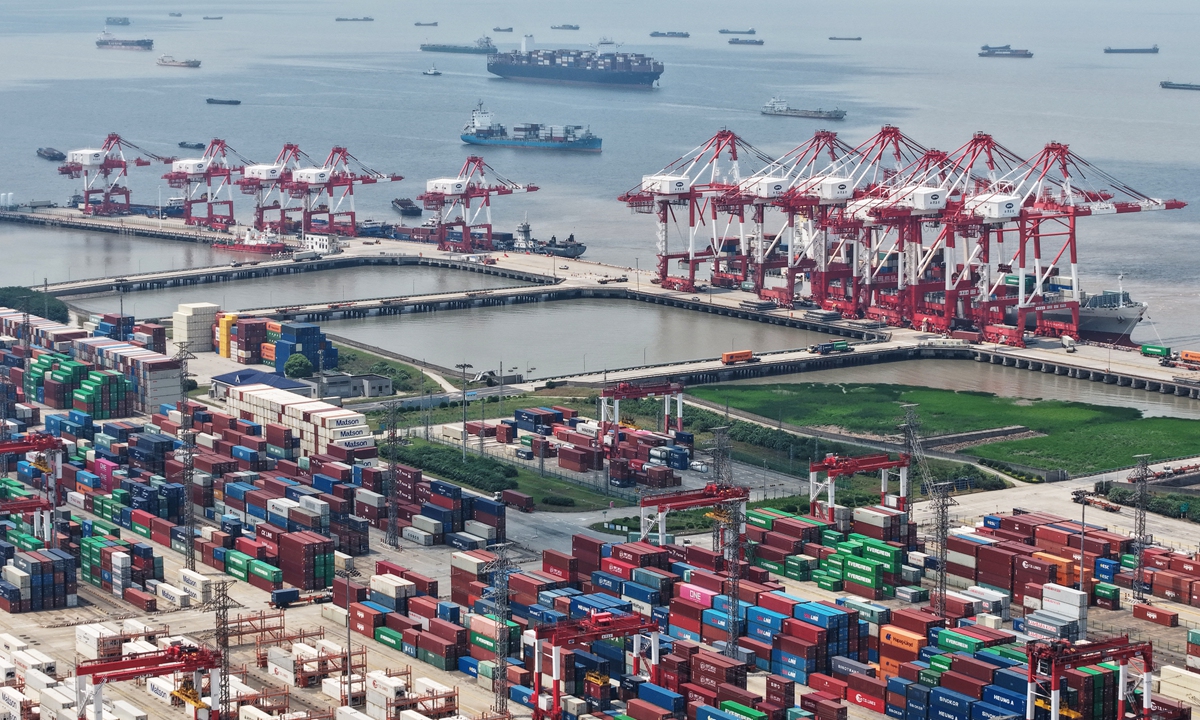
China's rapid rise in innovation capabilities has drawn broad recognition and positive assessments from the international community. However, some have taken a different stance, expressing concerns over China's technological and industrial advancement and even promoting the so-called "China Shock 2.0" narrative for various reasons, including the unfounded claim that China's industrial development is limiting others' growth opportunities.
A closer look reveals why this narrative does not hold up, for two fundamental reasons.
First, this narrative deliberately overlooks the inclusive, open and empowering nature of China's innovation.
China has always been a committed practitioner, active promoter, and major contributor to global economic, trade and technological cooperation. Through technological advancement and industrial upgrading, China has not only developed itself, but also provided the world with an increasing number of "innovation dividends."
For instance, digital economy, technological innovations in areas such as artificial intelligence applications, mobile payments and e-commerce have provided developing countries with valuable pathways for digital transformation. In the green energy sector, advances in China's photovoltaic, wind power and new energy vehicle industries have directly driven down the global cost of renewable energy, offering affordable solutions for countries tackling climate change. In consumer markets, high-quality, efficient, and cost-effective Chinese products have expanded global supply, reduced living costs and helped ease inflationary pressures worldwide.
Moreover, fast-growing Chinese innovation-driven companies have delivered returns of several times or even dozens of times for investors from around the world.
Companies from around the world can quickly find partners in China across the entire innovation chain, from research and development (R&D) and pilot production to mass manufacturing, making the commercialization of innovation more efficient.
They have not only succeeded in the Chinese market, but also strengthened their competitiveness globally. Facts have demonstrated that China's emerging technologies and products bring opportunities rather than shocks, and empowerment rather than threats to the world.
Second, it ignores the fundamental trends of technological innovation and the underlying dynamics of industrial evolution.
China's innovation has been built through years of strengthening its own capabilities. In recent years, the country has continued to increase investment in research and development, with its R&D spending ranking second globally.
Funding for basic research has reached a record high as a share of total R&D expenditure, while its pool of scientific and technological talent continues to expand. Through closer collaboration between the scientific community and industries, China has made rapid technological progress, driven continuous industrial upgrading and taken a leading position in some fields.
Innovation-driven development inevitably fuels industrial transformation and the dynamic reshaping of global production capacity, which is a natural outcome of international industrial division and cooperation.
For example, after years of technological accumulation, China has seized the opportunities created by the global green transition and developed competitive strengths in the "new trio" industries - new energy vehicles, lithium batteries and photovoltaic products - which have gained growing popularity in global markets. Portraying China's industrial upgrading as a "shock" is, in essence, a rejection of the broader historical trend of economic globalization.
"Innovation dividends" represent a positive-sum game, as the benefits of technological progress ultimately serve humanity. Distorting China's technological and industrial innovation and promoting the so-called "China Shock 2.0" narrative reflect outdated zero-sum thinking in some countries, while also revealing attempts to use criticism of China as a pretext to further advance protectionist policies.
Cutting through the rhetoric of protectionism, it becomes clear that the so-called "China Shock 2.0" narrative and "China overcapacity" claims are politically driven narratives that are detached from reality and lack factual basis.
Over the past decade, China has remained a major engine of global economic growth, contributing around 30 percent to global growth. In the past, China mainly provided the world with "market dividends" through its vast domestic market and cost advantages. Today, while continuing to offer greater "market dividends," China has also created "development dividends" by serving as a stable anchor and important hub for global industrial cooperation through its industrial growth. It is also providing the world with increasing "innovation dividends" through technological advancement.
China's market advantages, industrial development and technological progress are generating growing "market dividends," "development dividends" and "innovation dividends." These benefits, working together and reinforcing one another, are creating greater development opportunities and broader space for the world, offering a key perspective for understanding "China Opportunity 2.0."
Amid a complex and volatile international landscape and slowing global economic growth, innovation has become a crucial pathway to counter downward pressures and generate new growth momentum. Addressing global growth challenges requires greater cooperation in innovation. Rather than spending efforts on crafting the "China Shock 2.0" narrative, some countries should focus on domestic structural reforms and enhance their industrial competitiveness through openness and cooperation.
Embracing China means embracing the future. By using technological innovation to drive industrial innovation, China is accelerating the development of new quality productive forces. At the same time, China continues to expand high-level opening-up and provide new opportunities for the world through its own development. A more open and innovation-driven China will continue to deliver greater development dividends and work with countries around the world to build a more prosperous future.
This was compiled and translated by the Global Times English edition based on an article published in the "Chisu Jinsheng" economic commentary column of the People's Daily on August 7, 2026.
。
Current article:http://ba8d6.ningshunsaotuiqiao.shop/zoiv/20260826/4350.html
Published on:21:50:39
我的网站最新文章
- 47名“猴哥”惊现广西边境小草丛
- 榛子树成致富的“摇钱树”
- 中央气象台:今晚到明晚,内蒙古、黑龙江、吉林、辽宁、山东、湖北、湖南、江西、浙江、福建、广西、海南岛等地有雷暴大风或冰雹天气
- 接近宁德时代人士:枧下窝矿下一步规划将配合政府部门审批安排
- 着物姿の3歳娘と32歳母→2年後…… 驚きの姿に「なんて美しい親子」「ママ譲りの脚の長さ」「菜々緒さんかと思った」
- 国产影游《不心动才有鬼》发布王星辰采访:演员自称优点遍布全身
- Mohanlal Celebrates The Grand Comeback of Kireedam in 4K at IFFI 2025
- 《Intergalactic: The Heretic Prophet》卡司阵容扩充,迎来《UNCHARTED™: 盗贼传奇合辑》与《最后生还者:第一部》资深成员加盟
- 下周XBOX新游戏预告:8月24日至8月28日
- “美美与共 攀无止境”2026年中国攀岩联赛贵阳站圆满落幕
- 漳州核电4号机组 首个吊装模块吊装成功
- 一年22亿也买不来安全,卢浮宫安保形同虚设?
- 美国对伊朗下死手?凌晨2点瞄准第三国,中方已做好最坏打算,奉陪到底,兵器要闻,原创 美国对伊朗下死手?凌晨2点瞄准第三国,中方已做好最坏打算,奉陪到底
我的网站随机推荐
- China clears over 60 million metric tons of solid waste in campaign against illegal dumping
- 下班快回家!哈尔滨发布雷雨大风黄色预警!
- 碳纤维前铲/桶椅/轮毂等 仰望U9碳纤维个性化选装套件开售
- 东北三省GDP增速跑赢全国 吉林省一季度GDP增速领跑全国
- 卓荣泰要韩国瑜学好“法律”,翁晓玲反呛:不知道他的念到哪里去
- 外贸活力在这里持续迸发
- 社保补贴扩围,惠及更多劳动者
- DeepSeek plans steep price hike for API services
- UK records a fourth death linked to a storm that battered northern Europe
- 第十五周幼儿营养食谱
- 부산항서 급유 중 기름 해상 유출…긴급 방제
- 2025中国汽车产业发展(泰达)国际论坛新闻发布会成功举办
- 最强可达超强台风级!“沙德尔”会登陆我国吗?最新研判→